
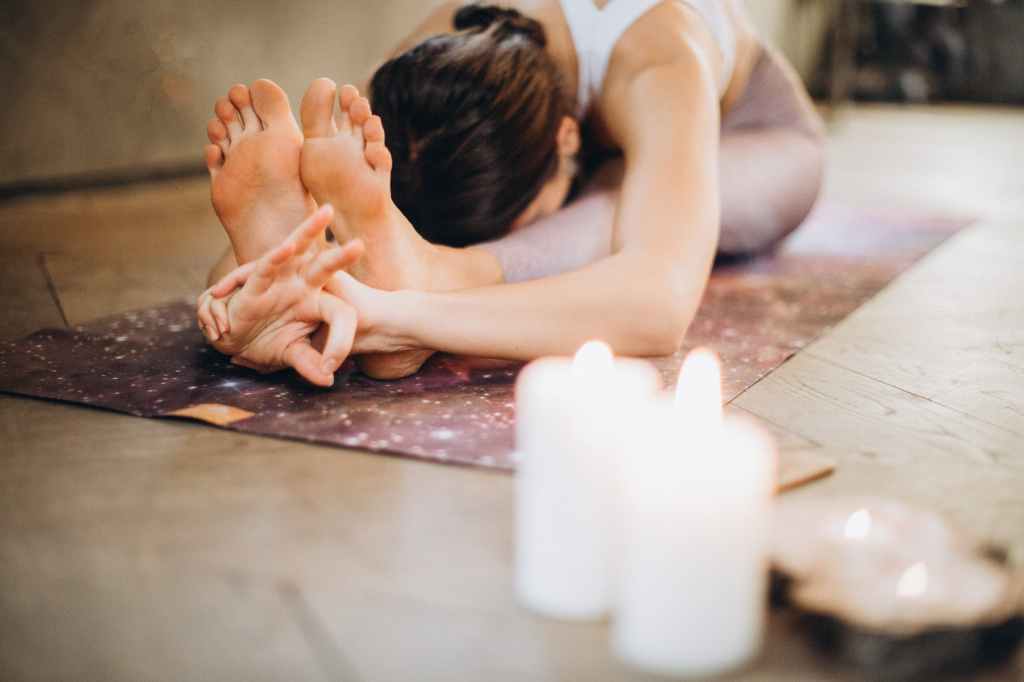
When it comes to creating a nourishing practice, one must not only consider the primary dosha that needs to be pacified but also is ideally aware of how not to aggravate the other doshas. Yoga asana is naturally very calming and nourishing for all doshas, yet there are some asanas that are more or less beneficial depending on your current dosha. Today, we will explore how to pacify Vata Dosha while avoiding aggravating Kapha dosha.
Both Vata and Kapha share the quality of cold, therefore a practice that is slightly heating can be beneficial for both Vata and Kapha dosha imbalance. Kapha needs a more stimulating practice while Vata can benefit from a more relaxed, slow flowing asana sequence. A gentle asana practice that focuses on grounding, compressing the lower abdomen and opening the heart will be most beneficial for the Vata/Kapha Dosha. Below is a sample sequence you can practice daily to experience more harmony. Ideally, you would enjoy this practice during the Vata time of day, 2:00-6:00 am/pm.
Opening Centering:
- Begin in a comfortable seated position and bring your awareness to your breath.
- Notice the sensation of your body seated on the floor, noting the points of your body that make contact with your mat/blanket. Feel these points becoming heavier, grounding down in to the earth.
- Take several minutes here to settle in, following your steady breath and connecting to the earth below.
- If you feel called, chant the sound Om when you are ready to begin your asana practice.
Warm ups:
- Inhale, reach the arms overhead, palms coming together. Exhale, release hands back down to the earth. Repeat for 5-10 breaths.
- Inhale, reach the arms overhead, palms coming together. Exhale while twisting to the right, beginning the twist at the base of your spine. Touch one hand to the earth behind you while the other reaches down to the ankle or right knee. Hold for 1-3 breaths. Inhale, reach arms overhead, palms together. Exhale and repeat on the other side. Repeat for 5 breaths on either side.
- With the spine lengthened, inhale while you reach your right fingertips towards the sky. As you exhale, begin to reach towards the left, opening the side body. Keep the bicep inline with the ear and the heart open. Hold or pulsate here for 3-5 breaths. Repeat on the other side.
- Coming to all fours with knees under the hips and wrists under the shoulders. Cycle through cat/cow for 10 breaths. Inhale into cow pose, belly dropping towards the floor, chest opening as the back gently bends. Exhale into cat pose, pulling the navel towards the spine, rounding the back and tucking the chin.
Asana Practice:
- Balasana (Child’s Pose): From all fours, bring the hips towards the heels as you lower the forehead to the earth. Knees can be wide here to create more space for the body. You may also choose to place a block beneath your forehead for more support. Breathe here for 5-7 breaths. Return to all fours.
- Anahatasana (Melting Heart Pose): Step the hands out in front of you, knees still under hips or slightly pressing back. With an exhale, lower the chest to the floor opening the shoulders and upper back. This can be an intense pose so please modify accordingly. Placing a bolster underneath the armpits, a block under the head or choosing to press the hips farther back are all great options to lessen the intensity on the shoulder and chest opening. Hold for 5-7 deep breaths. Press the hips towards the heels flowing into child’s pose, or return to all fours.
- Adho Mukha Svanasana (Downward Facing Dog): From all fours, ground the hands down into the earth. Roll the toes under. As you exhale, lift the hips towards the sky. Keep the knees bent if this feels best and slowly work your way towards pressing the heels towards the earth. Let the shoulders move towards the waistline, core engaged. Relax the muscles in the neck. Breathe steady here for 5 breaths.
- Uttanasana (Standing Forward Fold): As you inhale, walk the feet towards the hands, flowing into your standing forward fold. Exhale to release into this posture, feet hip distance apart, knees slightly bent if that serves you and upper body dangling towards the earth. You can rest your hands on blocks or the floor to bring more grounding into this posture. Hold here for 7 breaths. Bend the knees slightly as you inhale slowly rise to standing, feet still hip distance apart.
- Tadasana (Mountain Pose): Prepare the feet by lifting and spreading the toes then bringing them back to rest on the mat. Possibly shift your weight forward and back or side to side to find the center of your feet. Press the feet into the earth as you feel your legs become engaged. Gently activate the core, feeling the spine become long as you reach the crown of your head towards the ceiling. Inhale the shoulders towards the ears. Exhale, releasing all the tension in the shoulders, allowing them to drop naturally as you energetically reach you fingers towards the earth, still standing upright. If you feel called, inhale to reach the arms overhead, extending through the fingertips. Hold here for 7 breaths. As you exhale, allow the arms to float back to the sides of the body. Release all effort and take a moment to breath, feeling your feet against the earth.
- Virabhadrasana (Warrior 1): From standing with the feet under the hips, step your right foot back, coming in to a comfortable high lunge position. Heel may remain off the mat or you may choose to rest the heel on the earth with the foot at a 45 degree angle. Keep the hips facing forward, in line with the shoulders. Bend the left knee at a 90 degree angle making sure the ankle is in line with the knee. Hands can rest on the hips or reach overhead as you engage the core and lengthen the spine. To pulsate in this asana, as you inhale, soften the bend in the knee lifting up, as you exhale, sink into the left knee a bit more, opening the hips. Hold or pulsate here for 7 breaths. Repeat on the other side. Return to standing position.
- Vrikshasana (Tree Pose): Find a drishti (a focus point) and notice your breath. Begin to shift your weight into the left foot. Bring the sole of the right foot to rest upon the left ankle, toes still touching the ground and right knee opening out to the side. Press the left foot into the earth as you engage the core and lengthen through the crown of your head. Bring the hands into prayer position or reach them overhead, extending upwards. If it feels right, you can begin to slide the right foot up on to the calf or the inner thigh. Make sure to not place the right foot on the left knee to avoid straining the joint. Hold for 5-7 breaths. Slowly plant both feet on the earth once again and take a moment to notice the sensations in the body before repeating on the other side.
- Adho Mukha Svanasana (Downward Facing Dog): See description above. Hold here for 3-5 breaths. Exhale to return to all fours.
- Ustrasana (Camel): Kneeling with the knees below the hips, gently roll the toes under and bring the palms to the lower back, fingers either facing up the back or downward supporting the tailbone. Draw the elbows towards one another to help open the chest. As you inhale, begin to press the hips slightly forward as you lift the heart towards the sky, creating a gentle backbend. The chin may remain tucked towards the chest or you may choose to turn your gaze towards the sky opening the throat. Hold here for 5 breaths. As you exhale, slowly return to your starting position. If you feel called, take a moment in child’s pose before continuing the asana practice.
- Paschimotanasana (Seated Forward Fold): Sitting on your bum with the legs extended in front of you, feet may be together or hip distance apart. Make sure that the spine is straight, utilizing a blanket underneath the hips to help support the back if desired. As you inhale, reach the palms overhead, lengthening the spine. As you exhale, hinge from the hips folding forward reach the hands towards the feet and the nose towards the knees. Knees may stay bent here if that feels appropriate. A blanket under the knees can also be a wonderfully supportive option. Pulsate gently here; inhale and rise up just slightly, exhale to fold a little deeper. Stay here, holding in stillness of pulsating, for 10 breaths. As you inhale, slowly rise to seated.
- Setu Bandasana (Bridge Pose): In supine position, bring the heels as close to the hips as you comfortably can, feet and knees about hip distance apart. Keep the spine long, chin slightly tucked towards the chest with the hands resting next to the hips and shoulders pressing into the earth. As you inhale, reach the hips towards the sky, pressing into the feet and shoulders. You may pulsate here or choose stillness. If pulsating, lift the hips with the inhale and as you exhale release them closer towards the earth without resting them on the floor. Hold or pulsate for 7 breaths.
- Supta Baddha Konasana (Reclining Goddess): In supine position, bring the soles of the feet together with the knees resting out to the sides (butterfly pose). Extend the arms out to the sides, palms facing upwards. Bend the elbows at 90 degrees, settling into cactus arms. Relax here for 10 breaths.
- Shavasana (Corpse Pose): Lay on your back, legs extended and arms resting next to the body. Relax the whole body here, feeling yourself completely supported by the earth beneath you. Enjoy your well deserved relaxation!
Relaxation:
- Allow the eyes to close as you rest in Shavasana for 15-30 breaths. As you sink into your relaxation, take notice of each body part melting into the earth, allowing all any stress or tension to simply slip away. Gently allow the mind to become quiet and still as you effortlessly follow your breath.
It is always beneficial to end your practice with a moment of gratitude before entering back out into the world. I also recommend closing your session with the sound of Om.
Share your experience below in the comments! I would love to hear how this sequence works for you or any modifications you find to be most helpful.
with Love & Gratitude,
Charlotte McFarlin
 Magic Mamma Medicine